Beneficiary Category: Residents of Rafah Governorate, currently estimated at approximately 1.5 million people
Health Situation in the Project Area:
Since the beginning of the Zionist aggression on the Gaza Strip 119 days ago, the enemy has pursued a policy of forced displacement of the population towards Gaza’s southern governorates through various means. This includes murdering the health personnel in the northern Gaza Strip and directly targeting hospitals and health centres. With the onset of the attack on Khan Yunis Governorate in the southern Gaza Strip about a month and a half ago, most of its residents have fled it, including those who fled from Gaza and the North, towards Rafah Governorate. This led to an increase in Rafah’s population to about 5 times its original number, making the health situation in the governorate catastrophic and complex, particularly given the lack of human, medical, and logistical resources.
The latest statistics indicate the presence of more than 50,000 pregnant women in shelter centres in the Gaza Strip, with a daily birth rate of about 180 cases. The vast majority of the pregnant women suffer from malnutrition and general health problems due to the harsh conditions they experience in the shelter centres, whether in shelter schools or tents. There is no health facility in Rafah Governorate that provides women and maternity medical services except for the Emirati Hospital, which cannot cover the large number of daily cases. Statistics also indicate the presence of more than 60,000 breastfeeding women in shelter centres at the moment who are in need of immediate life-saving preventive, therapeutic, and nutritional interventions.
The Kuwaiti Specialised Hospital is deemed the most important charitable hospital that provides health services to citizens, alongside the only government hospital in Rafah Governorate. The geographic presence of the Kuwaiti Hospital in the heart of Rafah Governorate has strengthened its role, therefore placing on it the burden of providing medical services and healthcare for most of the population and displaced people in the governorate. This prompted the hospital management to take several steps, adopt necessary plans to address this crisis, and attempt to address its future consequences. One of these steps is to provide women and maternity services in the hospital.
Project Idea:
This project aims to provide women and maternity services to citizens and displaced women in Rafah Governorate. The hospital has a designated space for such a section, but it requires rehabilitation, including internal doors, windows, lighting, sanitary tools, painting, curtains, and false ceilings.
Objectives:
Contribute to providing medical services to the residents of Rafah Governorate and those displaced to it at the appropriate time and place.
Contribute to providing healthcare services to women in general and pregnant women in particular.
Contribute to providing maternity services in suitable medical conditions.
Project Justifications:
The significant emergency increase in the population of Rafah Governorate due to waves of forced migration and displacement.
The presence of more than 50,000 pregnant women in shelter centres in the Gaza Strip, with over 180 childbirth cases daily.
Most women, especially pregnant ones, suffer from malnutrition and other health effects due to the difficult conditions they experience in shelter centres and displacement camps.
Project Outcomes:
Equipped delivery room with a capacity of 2 beds.
Two postnatal care rooms, each with a capacity of 4 beds.
Obstetrician’s room and midwives’ room
Two equipped bathrooms for bathing.
Positive Impacts of the Project:
Enhancement of public health among citizens and displaced women in Rafah Governorate.
Reduction of the spread of diseases, epidemics, and postpartum complications among women.
Preservation of women’s dignity by receiving them in places suitable for providing various medical services.
Expansion Project of the Emergency and Ambulance Department at Kuwait Specialized Hospital
Gaza Strip – Rafah
Health Situation in Project Area:
Since the onset of the Zionist aggression on the Gaza Strip 100 days ago, the Zionist enemy has pursued a policy of forced displacement of the population towards the southern provinces of the Gaza Strip through various means, including the elimination of health facilities in the northern Gaza Strip and the direct targeting of hospitals and health centres. With the commencement of the attack on Khan Yunis and Central governorates in the south of the Strip over a month ago, most residents of the two governorates, as well as those displaced from Gaza and the north, have been forcefully displaced towards Rafah governorate. It has now become the largest population centre in the Gaza Strip due to its significant influx of displaced individuals. Statistics indicate that its population has reached approximately 1.3 million people, nearly four times its normal population. Consequently, the health situation in the governorate has become disastrous and complex, given the lack of human, medical, and logistical resources.
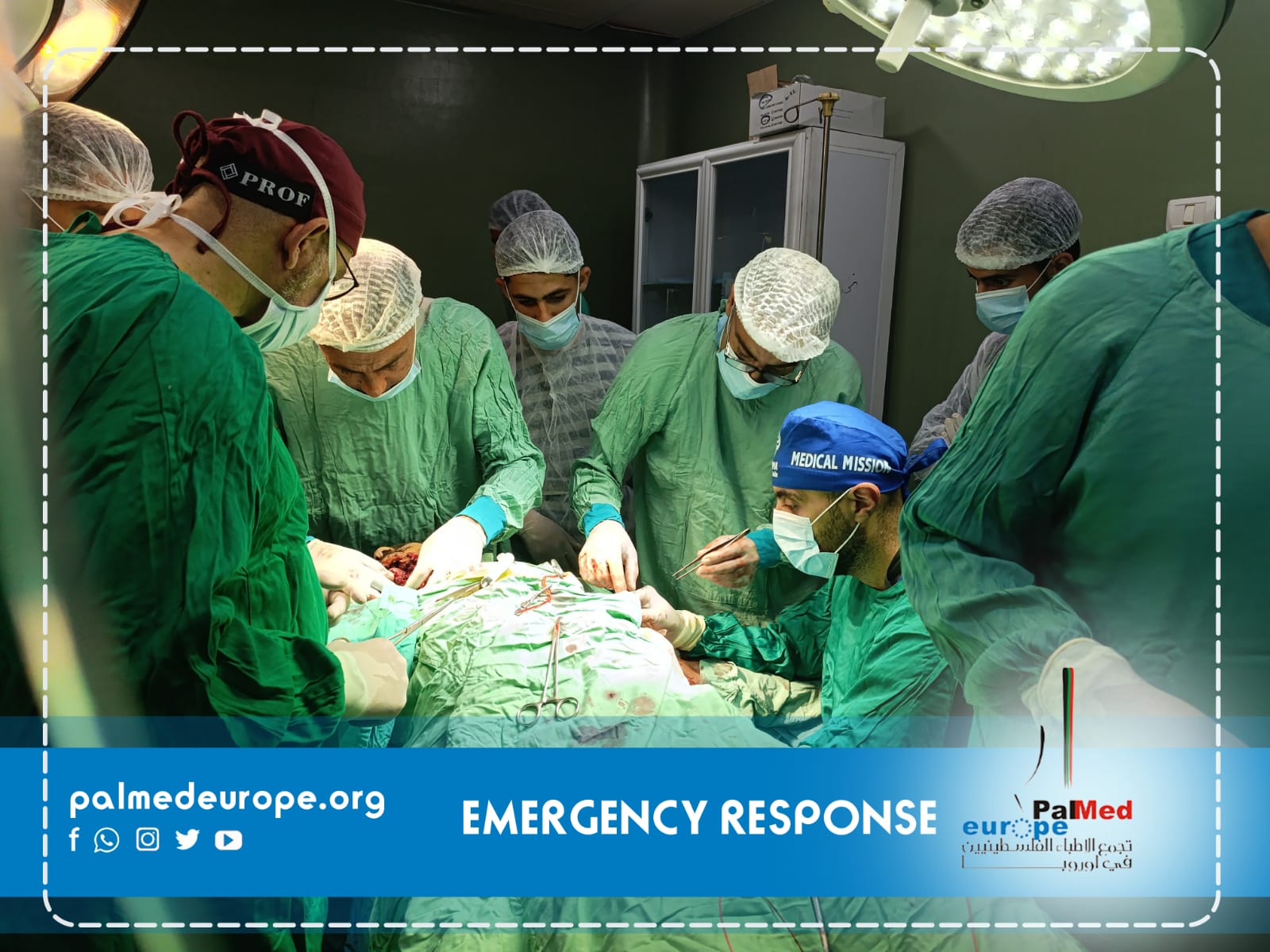
The Kuwaiti Specialised Hospital is deemed the most significant charitable hospital that provides healthcare services to citizens, alongside the only government hospital in Rafah governorate, due to the significant increase in the number of martyrs and casualties. Thus, there is an urgent need to increase the Hospital’s capacity to cope with the crisis resulting from the ongoing aggression as well as due to the congregation of most of the Strip’s citizens within its walls. Therefore, the proposal is to establish a field hospital attached to the Kuwaiti hospital to alleviate the immense pressure on its various departments.
Objectives:
Contribute towards providing medical services to the residents of Rafah governorate and those displaced to the area at the appropriate time and location.
Contribute towards addressing the significant pressure resulting from the increasing number of cases daily received by the hospital.
Contribute towards expanding the capacity of hospital departments experiencing high volume of cases.
Provide new equipped spaces to receive and handle medical cases using appropriate medical methods.
Project Justifications:
The urgent and significant increase in the population of Rafah governorate due to waves of forced displacement of residents.
The substantial increase in the number of cases received by the Hospital every day.
The urgent need to operate at maximum capacity around the clock, requiring the provision of new spaces equipped with all necessary resources, in addition to the existing spaces.
Project Components:
Medical tents (3), each tent accommodating (12) beds.
Project Outputs:
A field hospital attached to the Kuwaiti Specialised Hospital with a total area of approximately 180 square meters.
Increasing the Hospital’s bed capacity by (36) additional beds (3 tents * 12 beds per tent).
Positive Impact of the Project:
Enhancement of public health among citizens and displaced individuals.
Reduction of the spread of diseases and epidemics, especially given the severe congestion and crowding of citizens in the Rafah governorate.
Preserving the dignity of citizens by receiving them in places suitable for providing various medical services.
Hostile Environment Surgical and Anaesthetic Training (HEST)
In collaboration between the Palestinian Doctors Association and the David Nott Foundation, we aim to train and qualify more than 100 doctors who wish to contribute to providing relief to our people affected by the ravages of war in the besieged Gaza Strip.
Hostile Environment Surgical and Anaesthetic Training (HEST)
Developed and led by David Nott, this course is designed to enhance the skills of surgeons and anesthetists, better preparing them for the daily challenges they face in war zones and disaster-stricken areas. It also aims to assist doctors traveling to such regions.
The course equips doctors with the necessary skills to make rapid, critical decisions while preserving medical resources. It covers a range of surgical procedures and addresses common emergencies during disasters and wars, characterized by equipment shortages and a high volume of medical cases requiring urgent interventions to save lives.
Given that working in crisis zones often rules out cadaveric teaching, the HEST course relies on practical exercises, including suturing prosthetic organs and blood vessels, as well as demonstrations on our specially designed full-body simulator. We also simulate mass casualty scenarios, training our surgeons in the decision-making skills needed to prioritize patients and save lives.
The course focuses on cases associated with wars and disasters, ranging from gunshot and explosive injuries to violent injuries resulting from building collapses and fires. It also covers post-disaster procedures, including skin flaps and grafts, as well as the management of orthopedic fractures using external fixation and amputation cases.
During the course, doctors learn how to make decisions and manage emergency cases related to obstetrics and childbirth, including postpartum hemorrhage and cesarean sections.
The course spans a full four days, during which doctors can expect to cover the following specialties:
Primary and secondary survey, Damage control, Ballistics. Cardiothoracic trauma. Vascular surgery, Head and neck trauma, Paediatric surgery, Abdominal trauma, Orthopaedic surgery, Plastic surgery, Trauma in obstetrics and gynaecology.
Launch of Mobile Medical Clinics and Centres for The Palestinian Doctors Association in Europe to Serve Gaza.
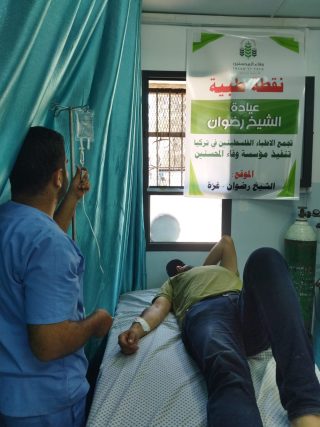
Given the immense destruction caused by the recent aggression on Gaza, with a significant number of hospitals and health centres being destroyed and over 36 centres and hospitals rendered completely out of service, the idea of establishing mobile medical clinics plays a crucial role in providing healthcare services to the displaced. Due to the difficulty of transporting citizens to hospitals and the lack of transportation means, this project is considered a beacon of hope for our people in the besieged region. The mobile medical clinic consists of two doctors, two nurses, a paramedic, and an ambulance driver to provide appropriate treatment for 20 days each month.
This project aims to establish 40 medical points and mobile clinics, offering care to approximately two hundred thousand displaced individuals, with services reaching small communities as needed. The clinics are expected to accommodate nearly four hundred patients per day.
These objectives are designed to address the immediate health needs of displaced communities, aiming to provide essential healthcare services, minimize the risk of disease transmission, and enhance the overall well-being and safety of the displaced population. Additionally, the project aims to showcase its work through informational videos and extend its reach by establishing the Mobile health clinics and medical centres.
The project urgently requires support to provide healthcare and prevent the spread of infectious diseases within the shelter centre, especially in the challenging conditions our people are facing as winter sets in.
Project Goals:-
Main Objective:
Contribute to improving the health conditions of displaced populations within shelter centers.
Subsidiary Objectives:
Ensure the provision of healthcare services to displaced individuals within shelter centers.
Prevent the spread of diseases and epidemics.
Safeguard the well-being of displaced individuals and alleviate financial burdens.
Produce introductory videos about the mobile clinics and their operations during the first month – Gaza.
The United Kingdom Clinics
The Italy Clinics
The Sweden Clinics
The Turkey Clinics
The France Clinics
In this context, we affirm that as a collective, we remain fully prepared to meet the health needs of our people, supporting their resilience. We will continue to work and collaborate with international and local institutions for this purpose.
A Step Towards Advancing Healthcare System in Palestine
Introduction to the Project:
The COVID-19 pandemic has created a conducive environment for the widespread adoption of online education. What was once considered secondary has become a crucial element, particularly in fields where certificates and experiences, especially in medical practices, are pivotal. As the pandemic persists, distance learning has emerged as the optimal and essential solution to ensure the continuity of the educational process while safeguarding the well-being of participants and students.
In light of these circumstances, the ideal timing has arrived for the introduction of a Continuous Medical Education Academy. This innovative project does not rely on a physical facility but rather deems the presence of participants, specialists, and an online platform sufficient for its launch and operation. It is considered a milestone and a cornerstone towards the larger vision of establishing physical academic facilities, training halls, and more, all essential components in the field of education and training.
General Objectives of the Academy:
1. Collaborate with universities, medical centers, and research institutions worldwide to organize specialized courses in researcher qualification and the fundamentals of scientific research.
2. Transform research outcomes into investment opportunities, prepare and support relevant studies, and harness medical expertise for investment in various projects.
3. Organize qualification courses for new graduate students in various medical fields, along with continuous medical education courses in Palestine.
4. Facilitate scientific meetings with renowned scholars and specialists from various medical fields.
5. Organize and support specialized medical conferences through planning and participation.
6. Conduct multiple courses using simulation devices (artificial human bodies) to train in various medical strategies.
7. Launch and support a specialized fund to back scientifically beneficial research with medical returns for society and humanity.
Vision:
Elevate the healthcare system in Palestine by qualifying medical professionals, providing educational solutions, serving the community and humanity, supporting medical education, research, development, and creating projects that bolster investment opportunities in medical fields.
PalMed UK in collaboration with the Royal College of Surgeons of England (RCSEng) offer the opportunity to pursue CPD accredited online modules at 50% discount of the standard cost. These modules can count towards the degree of “Postgraduate Certificate In Surgery” (https://www.rcseng.ac.uk/education-and-exams/courses/postgraduate-certificate-in-surgery/). The offer is aimed at Palestinian doctors particularly for doctors living or working in Gaza, West Bank or Jerusalem.
How it works?
There are 15 eLearning online modules on the RCS England website. Over the next 12 months, we will advertise 2-4 modules every two to four months. You will need to register for an online account on the RCS England’s website to allow you access to the modules when your application has been approved by RCS England. You will choose one or two modules from the list and you will be given 6 months to complete each module. We recommend that you do not register for additional modules offered in the following rounds until you provide a certificate of completion for the modules you already registered for. We recommend trying to complete a module every 2 month.
Benefits:
– Choice of a wide range of eLearning modules. – Study via the innovative RCS eLearning platform, using any device, whenever and wherever it suits you. – Recognised CPD and PG Certificate in the UK and internationally. – Improves your understanding and knowledge of important non-operative skills in Surgery. – Improves your understanding of the most up to date practice in the UK in a wide range of subjects. – Helps you prepare better for the MRCS exam and for understanding the UK system. – Boosts your application towards placement in the UK.
Suitability:
– Surgical trainees of all grades. – Internship doctors intending to pursue training in surgery. – All doctors preparing for the MRCS intercollegiate exam. – Senior surgical trainees, specialists and consultants might benefit from the updated information in some of the non-operative skills modules.